

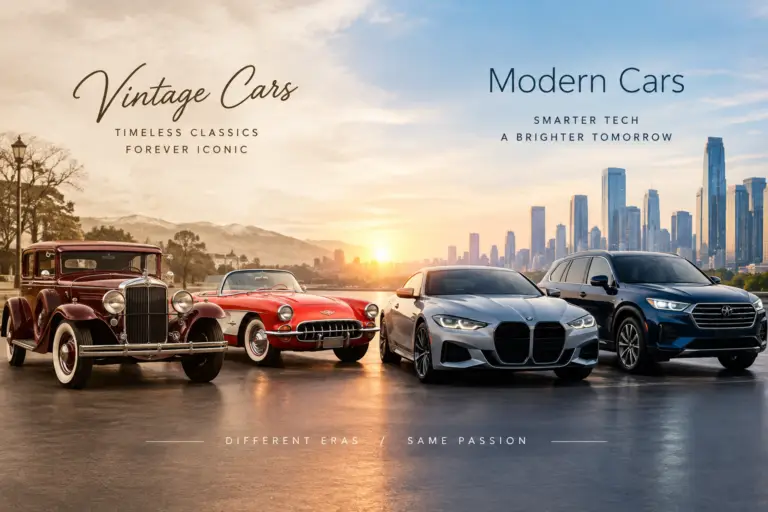
Modern cars and vintage cars represent two different eras of automobile design and technology. Modern cars are built with advanced features such as touchscreen displays, parking sensors, airbags, fuel-efficient or electric engines, GPS navigation, and driver-assistance systems, making them safer, more comfortable, and convenient for everyday travel. Vintage cars, on the other hand, are admired for their classic designs, elegant craftsmanship, powerful character, and historical value. While they may lack the technology and safety features of modern vehicles, vintage cars often have a unique charm that appeals to collectors and automobile enthusiasts. In simple terms, modern cars focus on technology, efficiency, and convenience, while vintage cars celebrate style, heritage, and timeless beauty.
The Timeless Appeal of Vintage Cars
Vintage cars have a special place in automotive history. Their distinctive designs, chrome details, classic dashboards, large steering wheels, and handcrafted interiors make them instantly recognizable.Unlike today’s highly computerized vehicles, many vintage cars relied primarily on mechanical components. This gave them a unique driving experience and allowed owners and mechanics to understand and work on many parts of the vehicle directly.For collectors and enthusiasts, owning a vintage car is often about more than transportation. It can be a way of preserving automotive history and appreciating the engineering and design of a different era.
Why Do People Love Vintage Cars?
Some of the biggest attractions of vintage automobiles include:
Classic and distinctive styling Historical and collectible valueMechanical simplicityUnique driving experience Craftsmanship and attention to detail Strong emotional and nostalgic appeal Every vintage car can have a story, making it feel more personal than an ordinary means of transportation.
The Innovation Behind Modern Cars
Modern cars have transformed the way people travel. Today’s vehicles combine mechanical engineering with electronics, software, connectivity, and advanced safety systems.Depending on the model, modern cars can include features such as touchscreen infotainment systems, navigation, rear-view cameras, parking sensors, smartphone connectivity, adaptive cruise control, lane-assistance technologies, and automated emergency braking.Electric and hybrid vehicles have also expanded the possibilities of modern transportation, offering alternatives to traditional petrol and diesel powertrains.Modern cars are designed with everyday convenience in mind. Features such as keyless entry, automatic climate control, connected services, adjustable seating, and driver-assistance systems can make driving easier and more comfortable.
Modern Cars vs Vintage Cars: What’s the Difference?
The differences become particularly noticeable when we compare the two across several important areas.
1. Design Vintage cars are often recognized for their distinctive body shapes, chrome accents, detailed interiors, and handcrafted appearance. Modern cars generally follow contemporary design principles, with aerodynamic shapes, LED lighting, sculpted bodywork, and technology-focused interiors.
Vintage cars represent classic automotive styling, while modern cars reflect contemporary design and engineering.
2. Technology Technology is one of the biggest differences between the two .Vintage cars were primarily mechanical machines. Modern vehicles increasingly depend on computers, electronic control systems, sensors, cameras, and software. A modern car may provide information about everything from tyre pressure to fuel efficiency, while a vintage car typically offers a much simpler dashboard and mechanical interface.
3. Safety Vehicle safety has developed significantly over the years. Modern vehicles commonly incorporate features such as airbags, electronic stability control, anti-lock braking systems, advanced braking assistance, reversing cameras, and various driver-assistance technologies. Vintage cars generally have fewer of these modern safety technologies. This is one reason why classic-car owners often treat their vehicles differently from everyday modern cars.
4. Performance Modern cars benefit from decades of advances in engine design, transmission technology, aerodynamics, suspension systems, and electronic control. Many modern vehicles are designed to deliver a balance of performance, comfort, fuel efficiency, and drivability. Vintage cars, meanwhile, can offer a more direct and engaging experience. Their mechanical character, engine sound, steering feel, and manual controls can make driving feel more connected to the machine.
5. Maintenance Vintage cars can require specialized maintenance because of their age and the availability of original components. Finding replacement parts or mechanics familiar with a particular classic model may sometimes be challenging. Modern cars can also require specialized servicing, particularly because of their sophisticated electronic systems. However, diagnostics can often be performed using specialized computer equipment. For vintage-car enthusiasts, maintenance can itself become part of the hobby.

Leave a Reply